
The truth about pull-through sharpeners
Pull-through sharpeners come in both manual and electric, and both are popular for a reason. They're inexpensive, easy to use, and can quickly improve the cutting performance of a dull knife. For many people, that's enough. The problem is that they're often marketed as a complete sharpening solution when they're really a compromise between convenience and edge quality.
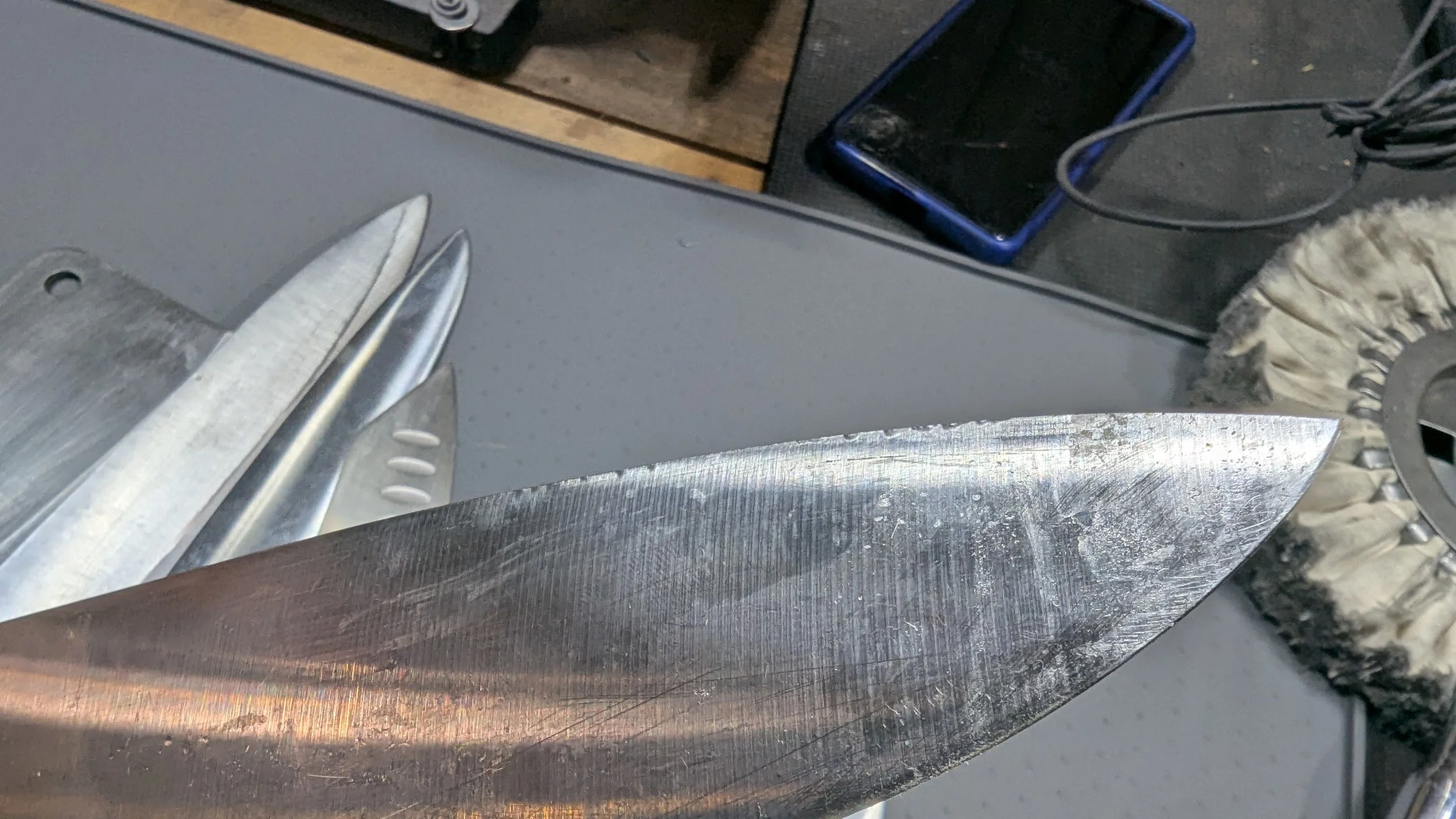
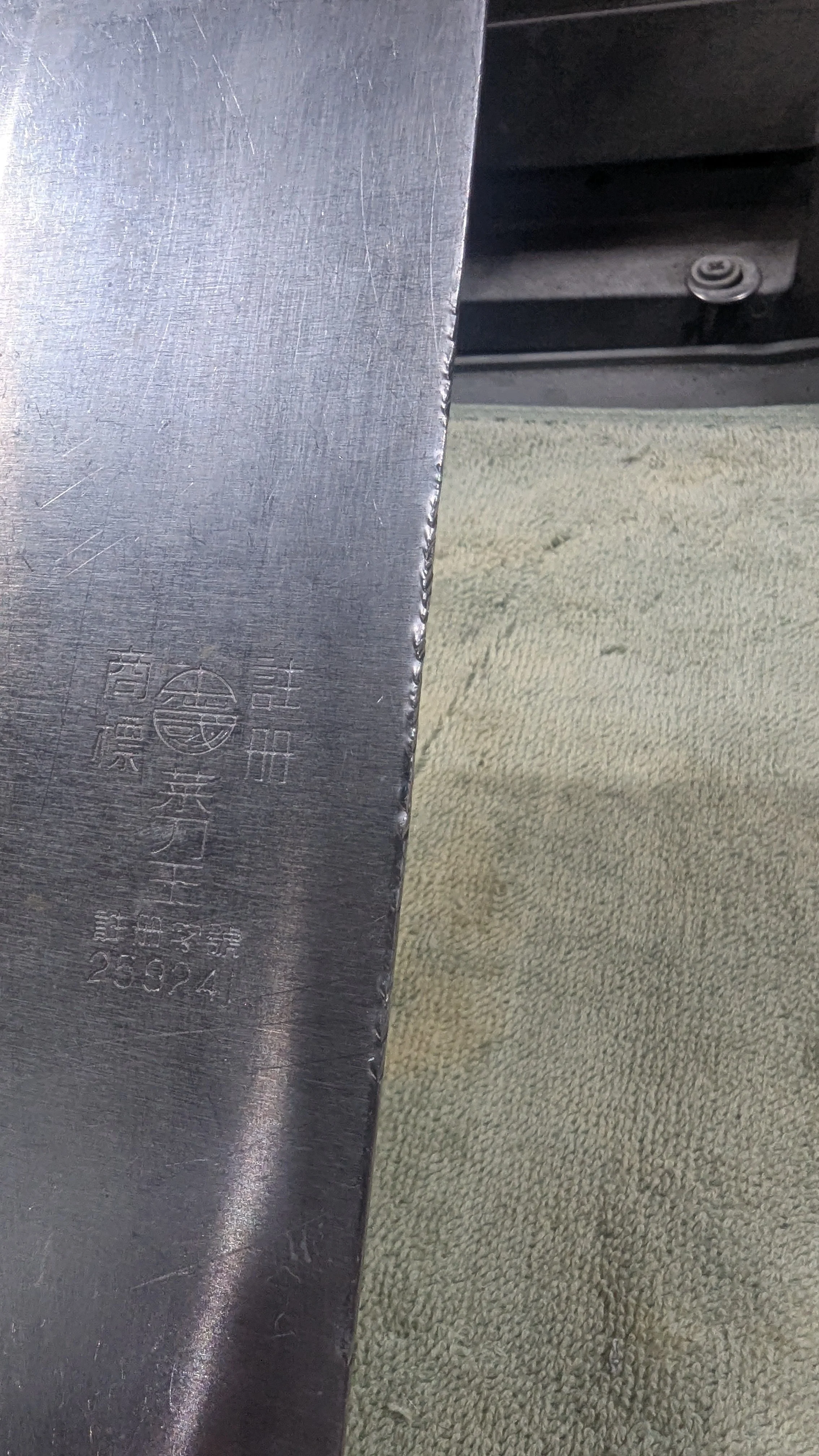
The knives pictured above came into my shop after years of being sharpened with a pull-through sharpener. At first glance, they might seem reasonably sharp, but a closer look tells a different story. Deep scratches extend well up the sides of the blade, the bevel is uneven, and large amounts of steel have been removed from the edge over time. While the knives may have felt sharper immediately after each use, repeated sharpening gradually changed the shapes of the blades and left behind damage that required significant corrective work. Pull-through sharpeners create the uneven edges you see above, and the missing divots act almost like serrations. This makes the knife seem sharper at first, but the edge typically dulls quickly and becomes increasingly difficult to maintain.
Most pull-through sharpeners use fixed-angle abrasive wheels or carbide cutters that remove metal aggressively. That's what allows them to sharpen quickly, but it also means they can't adapt to the individual geometry of the knife being sharpened. Every pass removes steel whether it's needed or not, and every knife is treated exactly the same regardless of its design, steel type, or intended use.
That doesn't mean pull-through sharpeners are useless. For inexpensive knives where convenience is the primary concern, they can provide a serviceable edge. However, for quality kitchen knives or knives you want to keep around for a while, repeated use often creates problems that become increasingly difficult to correct. Professional sharpening removes only the metal necessary to restore the edge, preserves the blade's geometry, and helps extend the useful life of the knife. A sharp knife should do more than cut; i should perform the way its maker intended.
Have a knife that isn't performing the way it should? True Grit Sharpening Services provides professional knife sharpening, edge repair, tip repair, and bolster realignment for customers throughout South King County and the greater Seattle area.
